
OUR PROJECTS
ADVANCING INCLUSIVE AND COLLABORATIVE SHARK RESEARCH IN THE MALDIVES

DEEP SEA SHARKS & MESOPHOTIC ECOSYSTEMS
This project explores rarely seen habitats and species in Maldivian waters, from 100 to 1,500 meters depth. In collaboration with the NatGeo Exploration Technology Lab, we deploy autonomous deep-sea cameras to survey these remote ecosystems, capturing images and videos of deep-sea sharks, other elasmobranchs, and mesophotic communities. This project provides the first systematic insights into the biodiversity, behavior, and distribution of deep-sea species in the Maldives, generating critical data to guide conservation of these largely unexplored habitats and their vulnerable inhabitants.

SHARK REPRODUCTION & NURSERY HABITATS
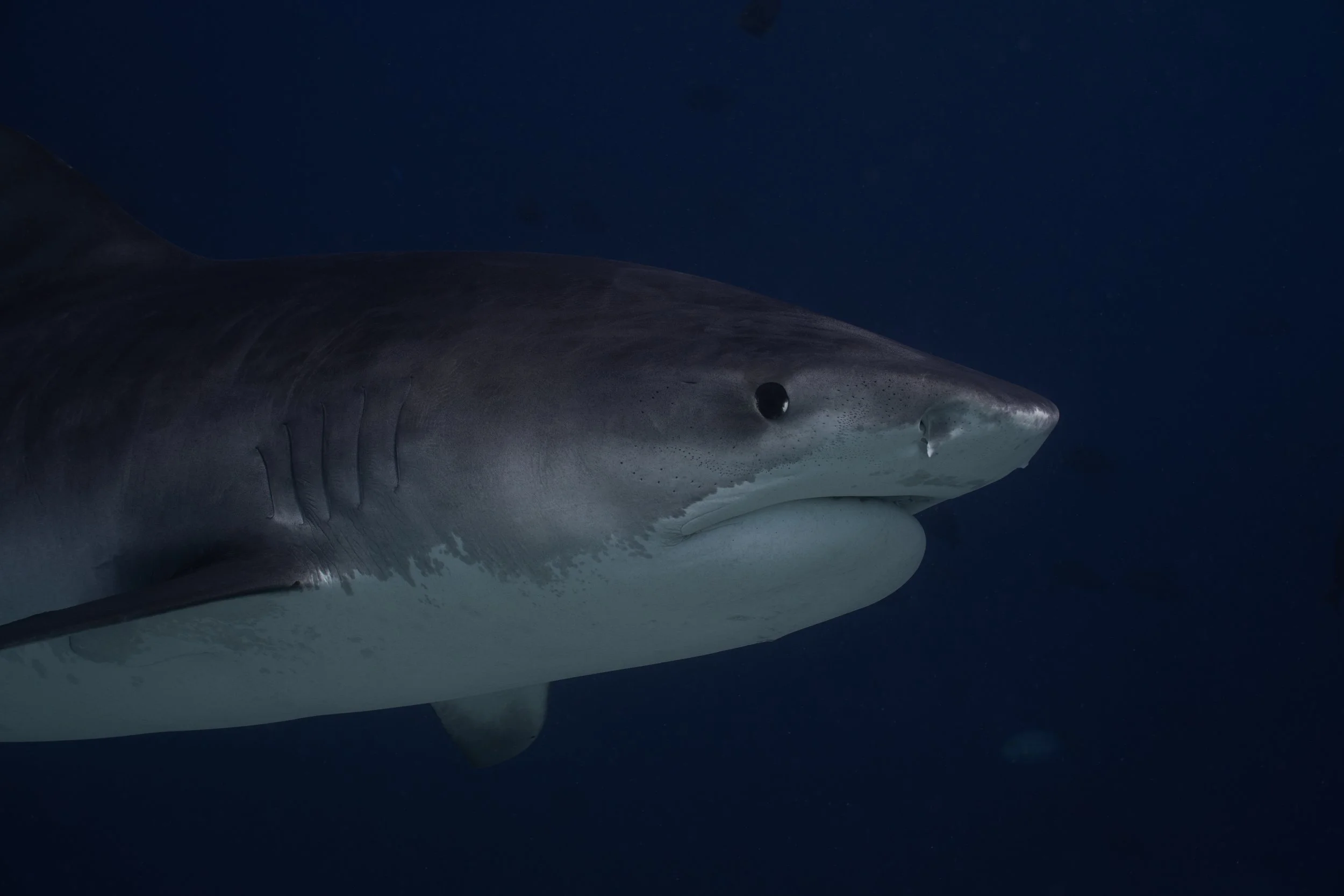
This project investigates the reproductive biology of tiger sharks using non-invasive ultrasound imaging in collaboration with Fuvahmulah Dive School, Pelagic Divers Fuvahmulah and Oregon State University. This allows us to monitor pregnancies, track embryonic development, and gain insights into reproductive cycles without disturbing the animals. Complementing this, we document mating scars and external indicators of pregnancy in the field, building a a better understanding of reproductive behavior and seasonality.
Fisheries interactions & BYCATCH
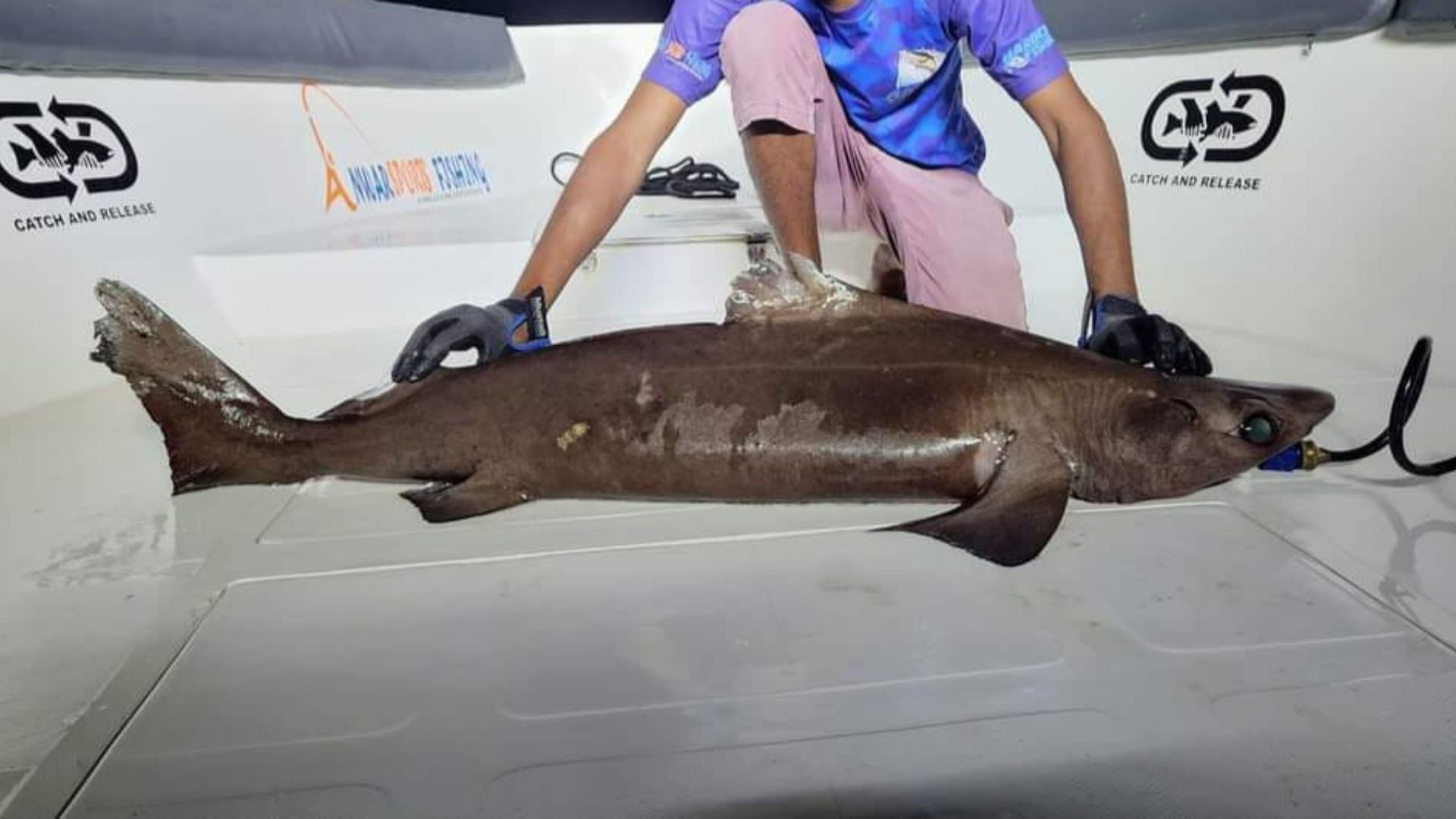
This project investigates interactions between sharks and local fisheries across the Maldives, including areas that are difficult to access by diving. By working with fishers to document shark captures, bycatch, and sightings, we collect critical data on which species are being caught, and in which life stage. Combining fisher knowledge with scientific monitoring, the project seeks to reduce post-release mortality, reduce negative interactions and expand observational capacity across the country..
RHINO RAY MONITORING & PHOTO-ID
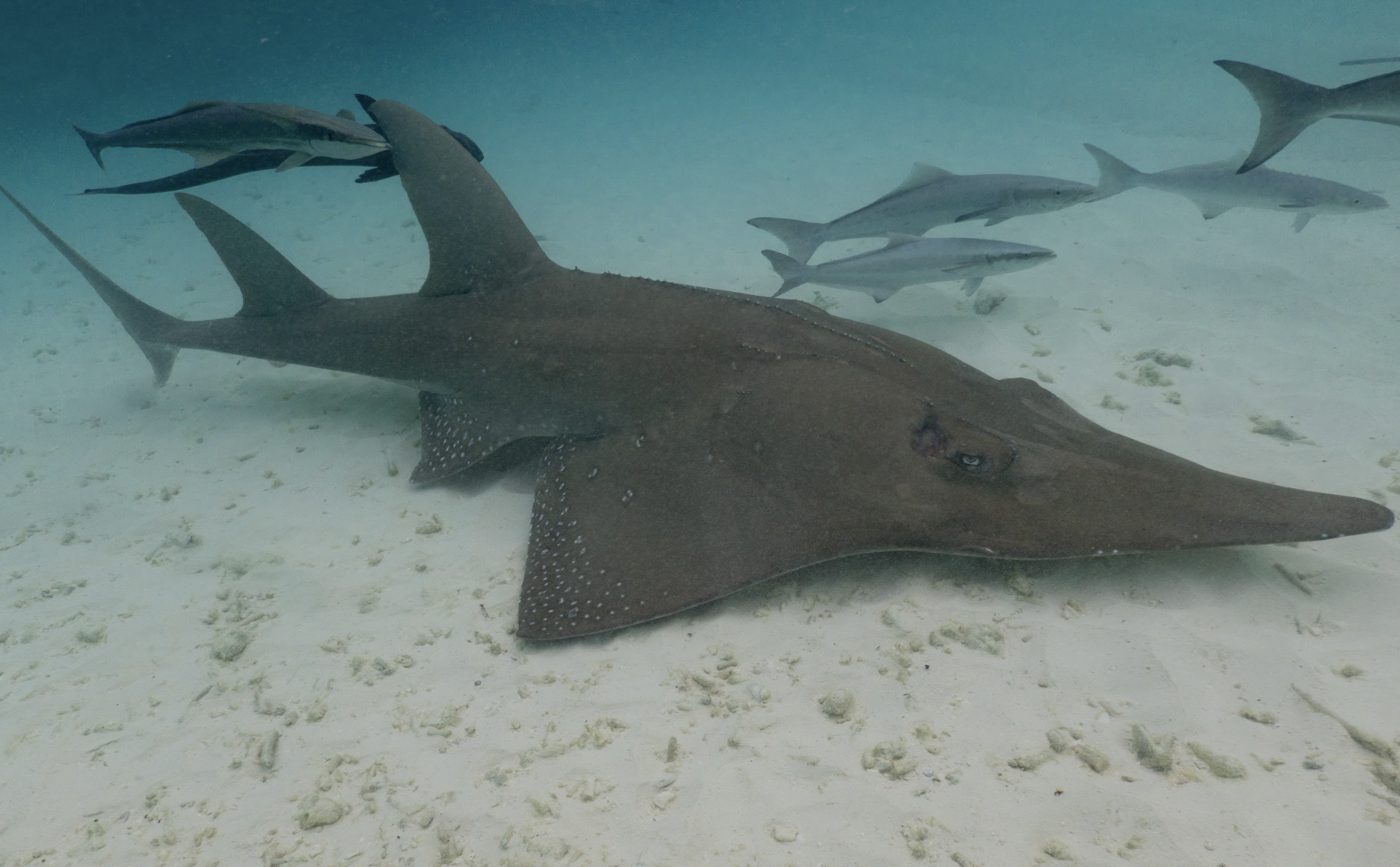
This project focuses on the critically endangered Bottlenose Wedgefish and Bowmouth Guitarfish, two of the Maldives’ most threatened elasmobranchs. Through photo-identification, in-water observations, and partnerships with local fishers and dive operators, we are uncovering how these rarely seen rays use coastal reefs, lagoons, and deeper channels. It provides the first detailed insights into their distribution, habitat use, and individual health, offering essential guidance for targeted conservation and protection of these enigmatic species in Maldivian waters.
TIGER SHARK MONITORING & PHOTO-ID
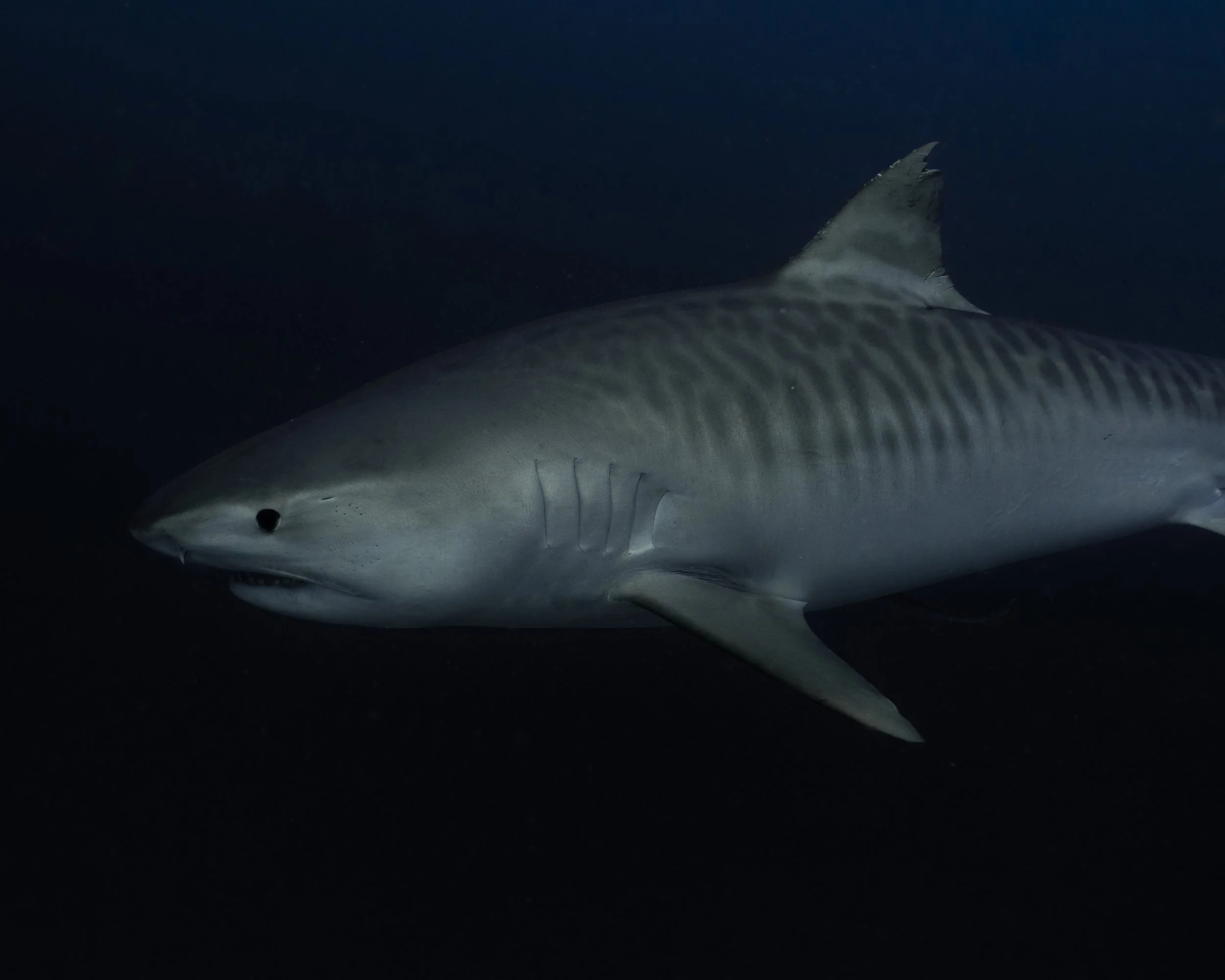
We are collecting sighting data on tiger sharks across the Maldives and using non-invasive photo-identification to document individuals based on their unique markings. By building a national photo-ID catalogue, the project allows us to gain insights into population structure, site fidelity, movement patterns, reproduction and health of these animals. In Fuvahmulah, we work together with local dive operators to expand the tiger shark photo-ID monitoring programme originally started by Fuvahmulah Dive School, documenting the world’s largest known aggregation of tiger sharks around the island with more than 300 individuals identified to date.
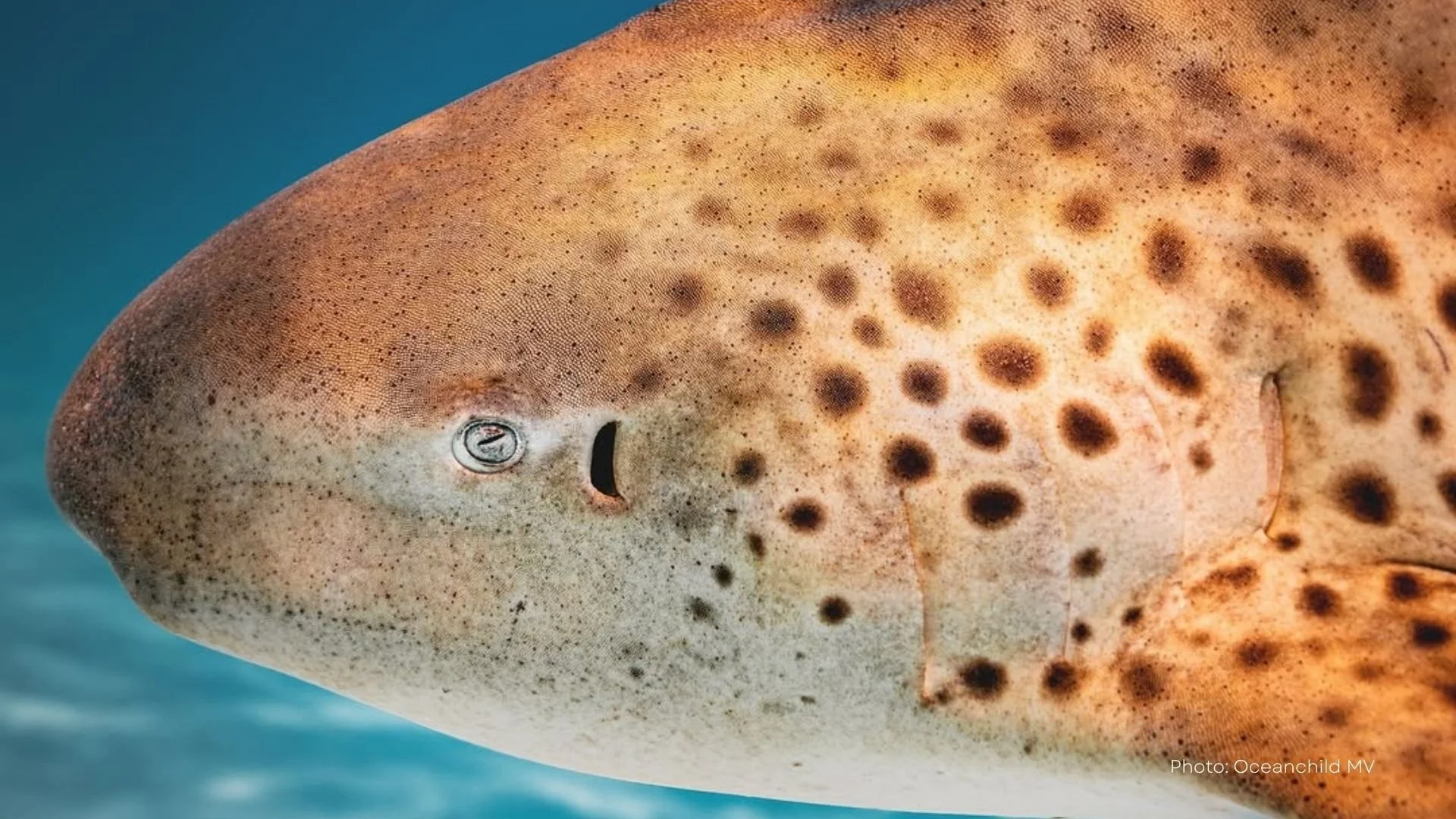
LEOPARD SHARK MONITORING & PHOTO-ID
Supported by the Zoological Society of London, the project uses photo-identification of each shark’s unique spot patterns to build the first dedicated database for understanding population structure, site fidelity, movement patterns, and identifying key habitats. By integrating field surveys, community engagement, and local ecological knowledge, the project generates essential baseline data to inform evidence-based conservation and enhance protection of leopard sharks in the Maldives’ rapidly changing coastal environments.
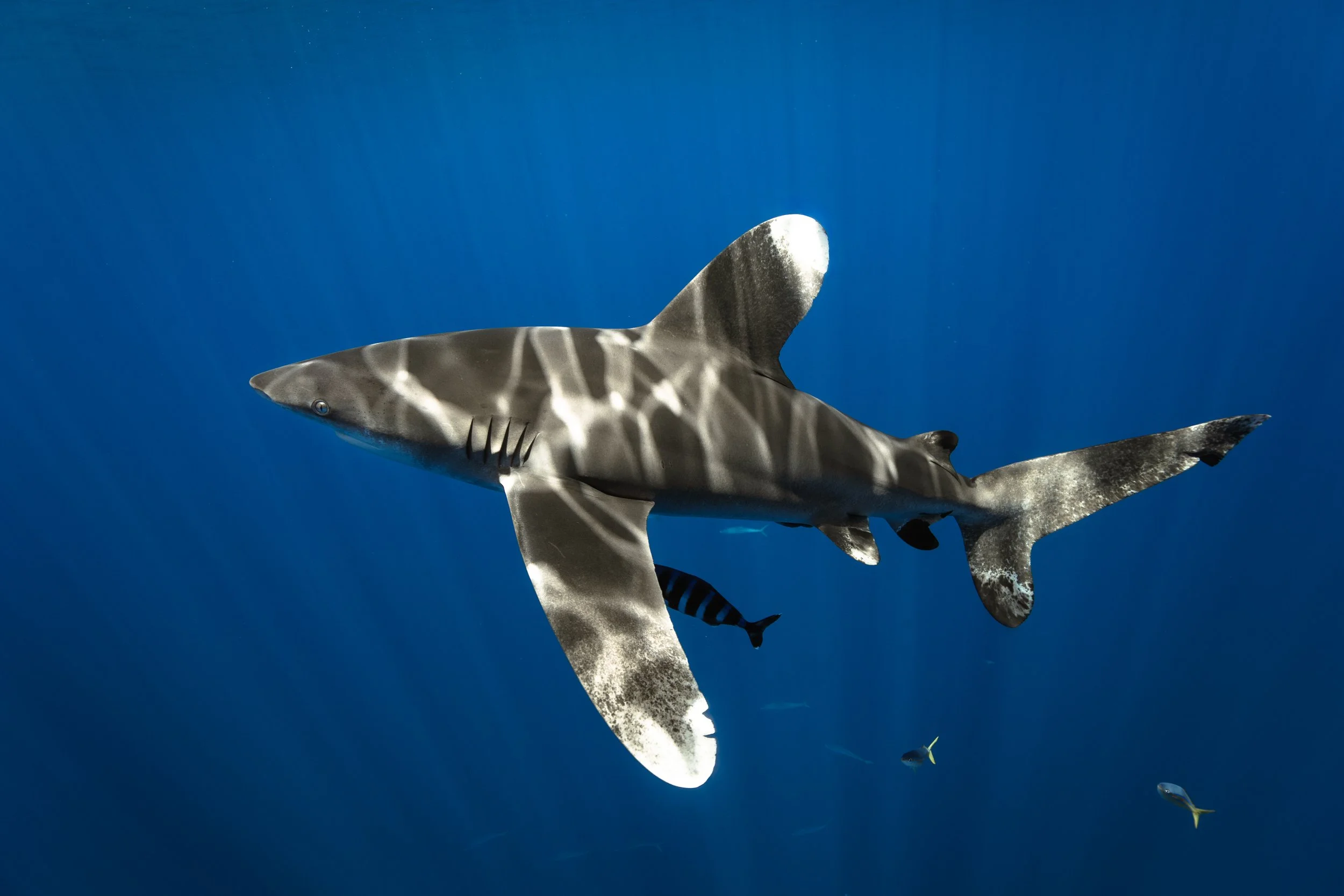
OCEANIC WHITETIP SHARK PHOTo-ID
We actively monitor oceanic whitetip sharks across the Maldives and maintain a national Photo-ID database of these critically endangered and highly mobile predators. Working closely with artisanal fishers, sports fishers and dive operators we are collecting sighting data in pelagic waters, data on interacting with fisheries and conducting identification of individual sharks through the unique pattern on the edge of their dorsal and pectoral fins.
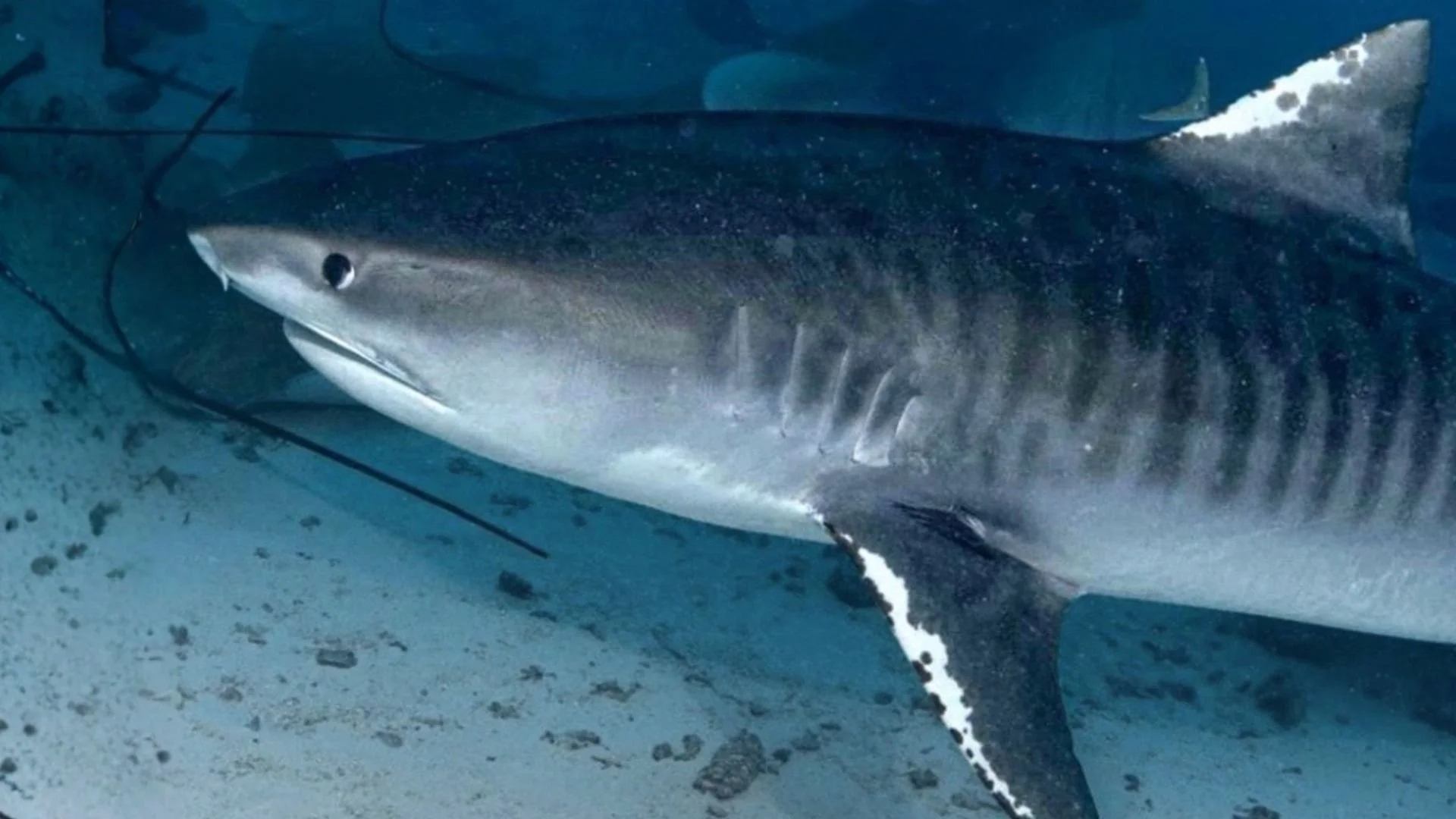
SKIN CONDITIONS IN SHARKS
This project focuses on documenting and understanding dermatological conditions in Maldivian sharks, including bacterial and fungal infections, tumors, skin diseases, and genetic conditions. Using non-invasive in-water observations and photographic documentation, we track individual sharks over time to assess the prevalence, distribution, and potential causes of these conditions. The project generates critical baseline data to support shark health assessments, inform conservation strategies, and provide insights into anthropogenic impacts.
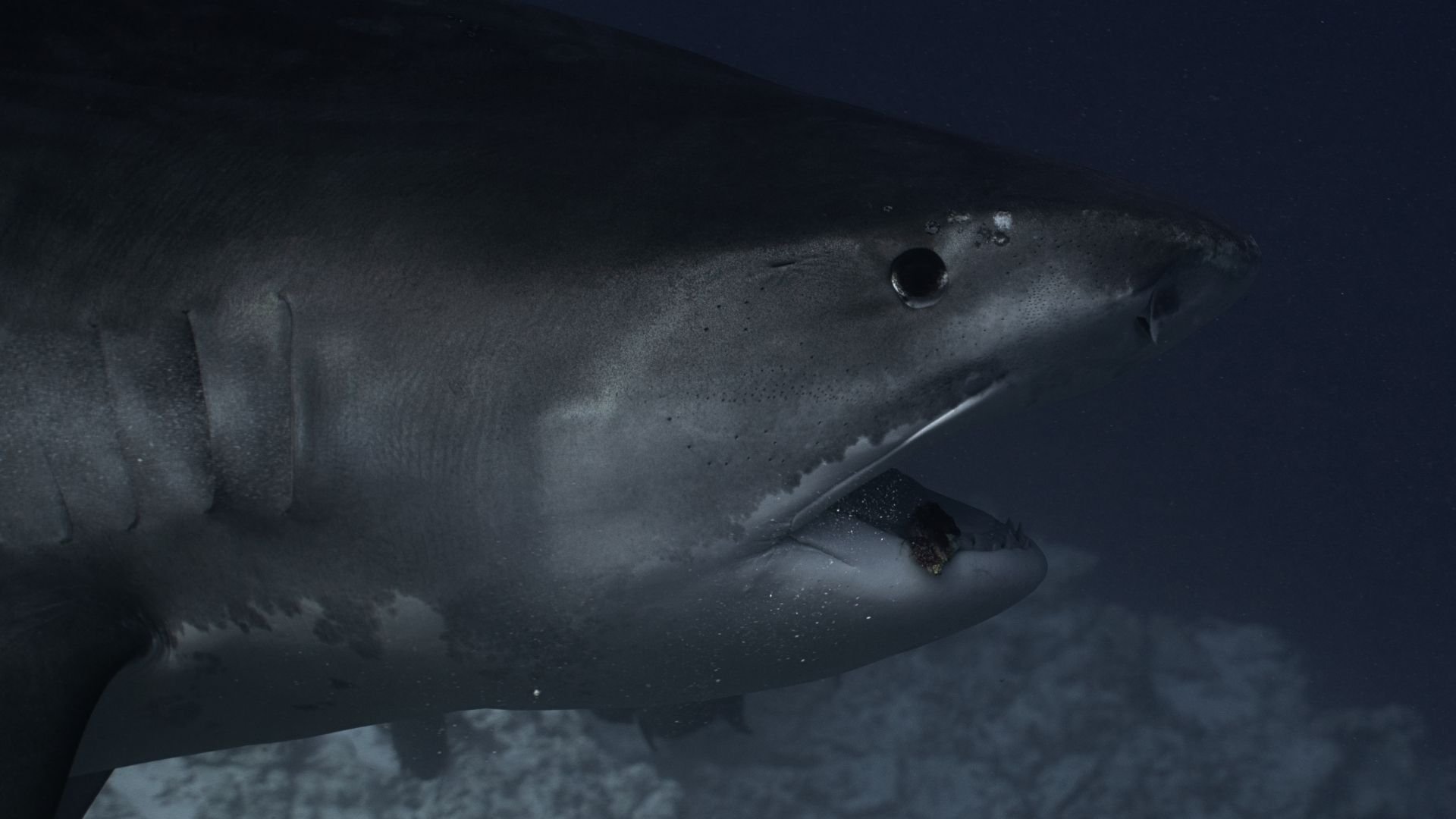
TIGER SHARK DIET
Our team is currently investigating the feeding ecology of tiger sharks at a provisioned site in Fuvahmulah, Maldives. Through in-water surveys of bait interactions and analysis of fecal samples, we document what these apex predators are eating and how provisioning may alter their natural foraging behavior. By combining long-term observation with scientific sampling and local knowledge, we seek to understand how provisioning may influence tiger shark health, and dependence on human-provided food, providing evidence to guide sustainable tourism and local shark management in Maldivian waters.
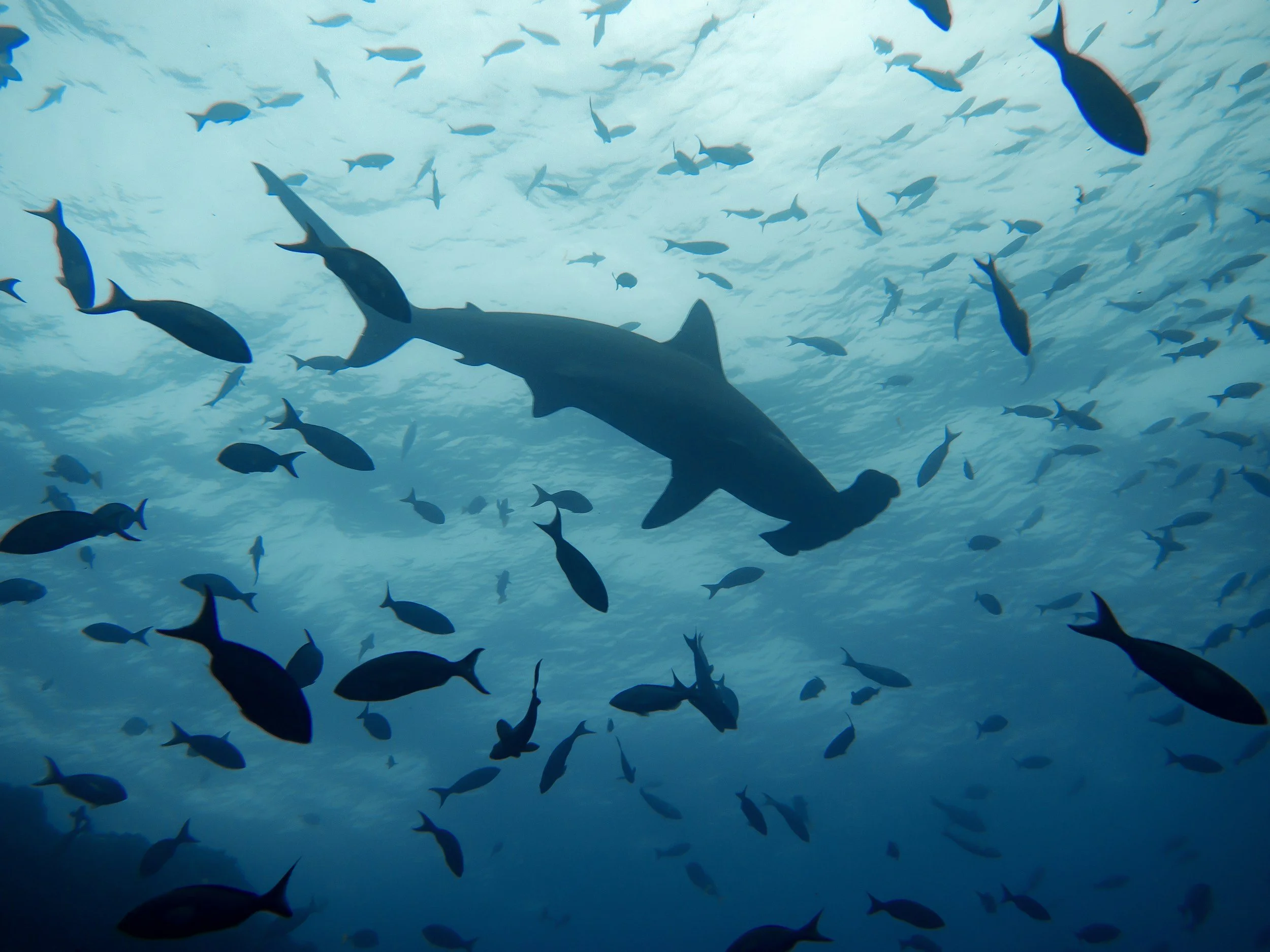
SCALLOPED HAMMERHEAD SHARK MONITORING
We are collecting data on the distribution and habitat use of scalloped hammerhead sharks across the Maldives. Through sightings reports, and collaborative surveys with local fishers and dive operators, the project maps key aggregation sites and movement patterns of this critically endangered species. By combining scientific monitoring with local knowledge, we seek to generate essential data to identify important habitats, inform national conservation strategies, and strengthen protection for scalloped hammerheads throughout Maldivian waters.